Calendar
Upcoming events
RFS North Wales Division
RFS South Western
Haldon Forest - Forestry England. Managing recreation around ecology and forestry operations and CCF versus clear fell. To include Divisional AGM.
National Forestry Conference
Woodknowledge Timber 101: Trees to commercial timber species
Timber 101 is a free CPD-friendly series from Woodknowledge Wales, tailored for professionals across the built environment, procurement teams, housing developers, designers, and anyone aiming to expand their knowledge of timber as a contemporary construction material.
This session focuses on the biological foundation of timber and how the growth processes of trees impact its structure and characteristics.
We will explore:
• The difference between softwoods and hardwoods
• How tree growth habits affect timber characteristics
• The naming of trees and timber – and the confusion this can cause
• Common commercial species used in the UK and Europe
• Opportunities and limitations of home-grown timber
This session will help attendees understand the link between forest and final prod uct – and the importance of choosing the right species for the right job.
Introduction to Technical Membership
Are you considering applying for Technical membership of the Institute of Chartered Foresters? This free webinar provides an introduction to the Technical Membership Entry (TME) process and the resources available to potential applicants.
The session will give you the opportunity to ask questions about the TME process and application submission. It will also include a live demonstration of the TME application dashboard, helping you understand what to expect when submitting your application.
This webinar will take place on Zoom and you must register to attend no later than 12 noon on 7 October.
RFS Herefordshire Division
RFS South Wales
Brook Farm and Bryn Arw.A joint visit with Herefordshire Division. The morning visit to Brook Farm will look at commercial woodland creation. In the afternoon, we will visit Bryn Arw to compare this with community-led projects.
Bats and Woodland Management Course
Webinar - Planning to planting: Managing new woodland
The first few years of life can be critical to establishing a healthy tree. If you're planning to plant new woodland, join the Forestry Commission for this practical session aimed at landowners and land managers. Speakers will include Woodland Resilience Advisor, Chris Watson, who'll discuss how to give your trees the best start in life and landowner Martin Hole, from Montague Farm, who'll share his experience of establishing woodland in East Sussex.
Woodknowledge Timber 101: Wood material structure & properties
Hosted by Woodknowledge Wales, the Timber 101 series explores the properties, performance, and specification of timber across the supply chain.
This session offers a hands-on introduction to wood as a natural resource and highlights its essential physical and mechanical characteristics.
We will cover:
• Variability in appearance, grain, texture and figure
• Density and its impact on performance
• Juvenile wood and reaction wood – and how to recognise them
• Corrosive interactions and chemical behaviour
• How timber behaves structurally and what this means in design
This session is ideal for specifiers and designers who need a better understanding of how wood’s material properties affect its use in construction.
Woodknowledge Timber 101: Moisture in timber - Part 1
The Timber 101 webinar series from Woodknowledge Wales is a great opportunity for foresters interested in gaining deeper insight into the materials they supply, and for designers to achieve a better understanding as to how the materials that they specify, behave in various conditions.
Understanding moisture levels is crucial to the functionality of timber, but it’s frequently overlooked. In this session, we will define ‘moisture in timber’ and discuss methods for evaluating and handling it effectively.
We will cover:
• Green vs seasoned timber – how and why moisture content changes
• Timber drying methods and moisture testing
• Shrinkage and movement in service
• Storage and transport considerations
Understanding how timber interacts with moisture is key to ensuring long-term performance and avoiding structural or aesthetic failures.
Woodknowledge Timber 101: Moisture in timber - Part 2 Understanding and accounting for moisture in wood
If you’re just starting to explore timber or want to deepen your understanding, the Timber 101 series from Woodknowledge Wales offers straightforward, fact-based guidance to help you make informed choices.
This second session on moisture, explores advanced techniques for managing movement and moisture in design and specification.
Attendees will learn about:
• Swelling and shrinkage behaviour in different grain orientations
• Movement classifications and use classes
• Accommodating movement in timber elements in buildings
• Why moisture variation causes problems – and how to reduce risk
This technical session is suited to those specifying structural or exposed timber, or responsible for detailing timber components in buildings.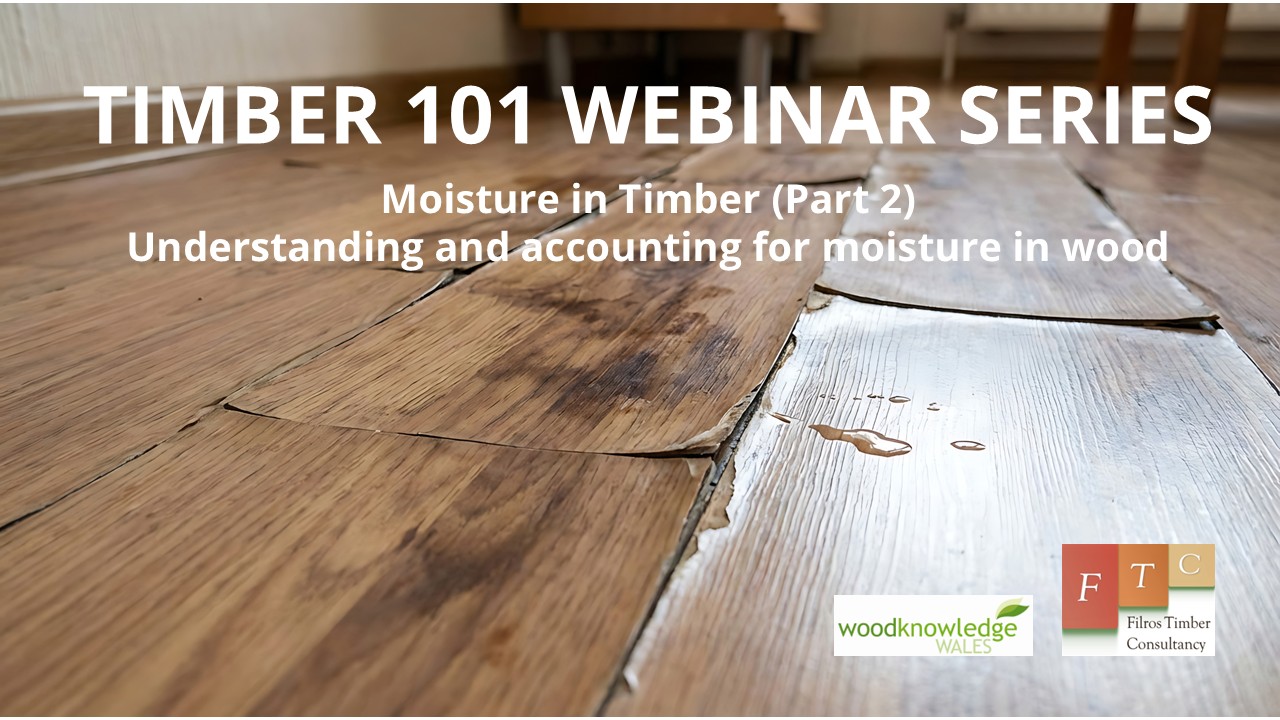
Woodknowledge Timber 101: Natural durability
Discover the essential knowledge about timber that designers, housing developers, and forestry experts rely on for success through the Timber 101 series from Woodknowledge Wales.
The ability of timber to last over time is an essential factor in its performance. This session explores the natural resistance of various species and provides guidance for making appropriate selections.
You will learn about:
• Durability classifications and service life expectations
• Which species perform well outdoors or in exposed conditions
• When and how to specify wood preservatives
• The difference between natural durability and treated performance
This session will be useful for anyone specifying timber in external or high-risk applications.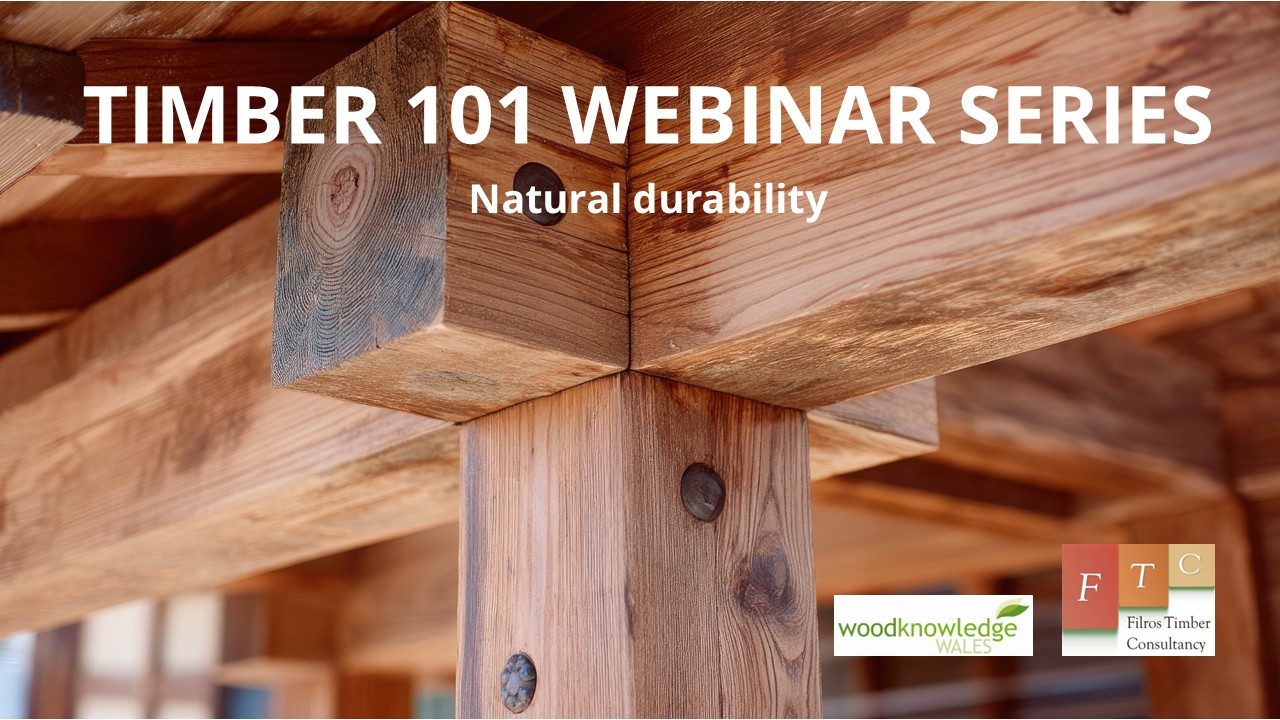
Woodknowledge Timber 101: Quality of timber – Perception and confusion
When we talk about ‘quality’ timber, what are we really saying? The last session of the Timber 101 2026 series breaks down terminology that is often misunderstood and looks into how different perspectives shape views on timber quality.
We will cover:
• The range of timber defects – and which ones matter
• How and when to grade timber
• Confusion around visual vs structural quality
• What architects, sawmillers and foresters each mean by ‘good timber’
By clarifying the differences in how quality is defined and understood, this session will help reduce over-specification, waste and missed value opportunities in timber supply chains.